
Table of Contents
ToggleEsports coverage examples show how media outlets bring competitive gaming to millions of fans worldwide. From live broadcasts to in-depth player profiles, the ways journalists and creators report on esports have evolved dramatically over the past decade. Major tournaments now attract viewership numbers that rival traditional sports, and the coverage has matured to match that audience.
This article breaks down the main formats used in esports coverage today. Whether it’s a Twitch stream with expert commentary or a long-form feature about a rising star, each approach serves a specific purpose. Understanding these esports coverage examples helps fans appreciate the craft behind the content they consume, and helps aspiring creators learn what works.
Key Takeaways
- Esports coverage examples include live broadcasts, tournament recaps, player profiles, and industry news—each serving distinct audience needs.
- Live match broadcasting with play-by-play casters and color analysts mirrors traditional sports production and draws millions of concurrent viewers.
- Tournament recaps and highlight reels condense hours of competition into shareable content that spreads quickly across social media platforms.
- Player profiles and team documentaries humanize competitive gaming by telling the stories behind the gamertags.
- Industry news and trend analysis cover roster moves, sponsorship deals, and business developments that shape the esports landscape.
- Podcasts and data journalism are emerging esports coverage formats that offer deeper insights into competitive gaming’s growth and sustainability.
Live Match Broadcasting and Commentary
Live match broadcasting represents the most visible form of esports coverage. Platforms like Twitch, YouTube Gaming, and specialized networks stream tournaments to global audiences in real time. The 2024 League of Legends World Championship, for instance, drew over 6 million concurrent viewers during its finals.
Commentary teams typically include two roles: play-by-play casters and color analysts. Play-by-play casters describe the action as it happens. They call out kills, objectives, and pivotal moments with energy and precision. Color analysts provide context between fights. They explain team strategies, player tendencies, and the significance of draft picks or item builds.
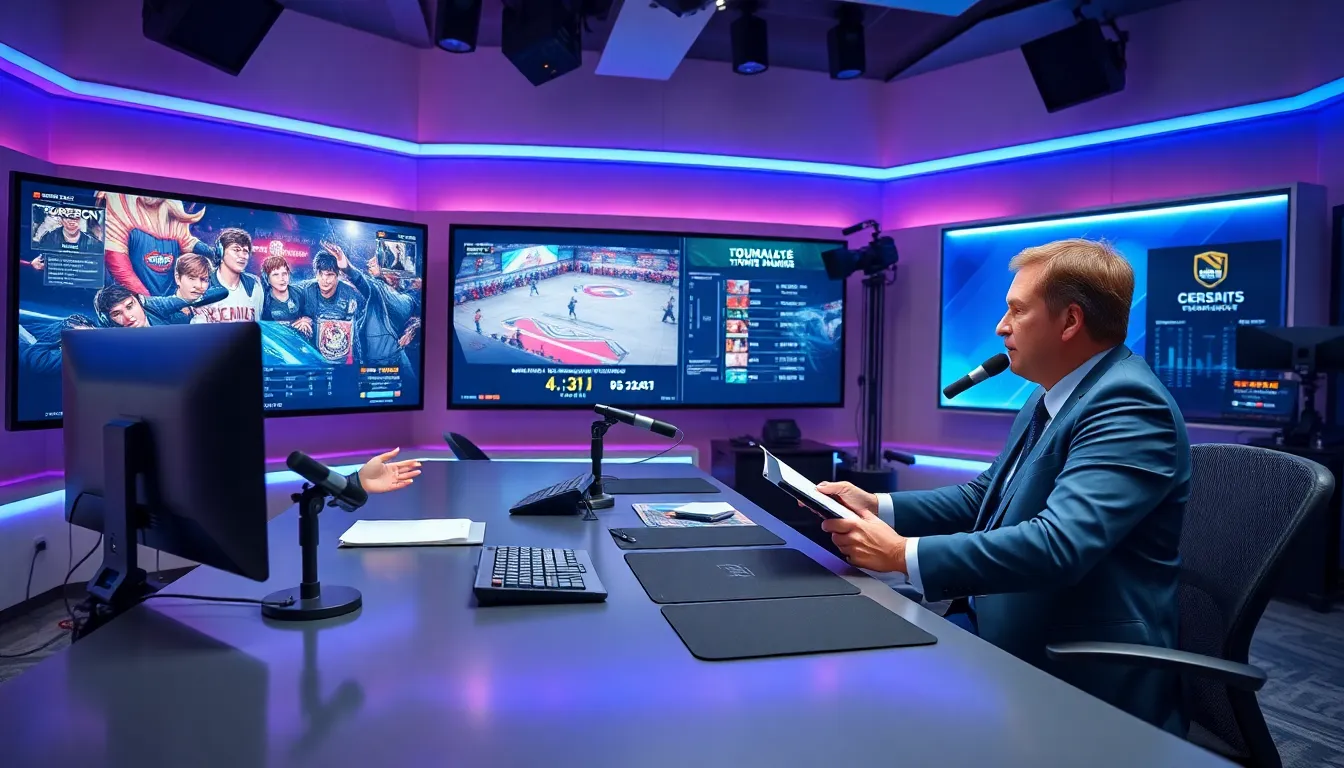
Top esports coverage examples in broadcasting come from organizations like Riot Games, ESL, and BLAST. These producers invest heavily in production value. Viewers see instant replays, statistical overlays, and pre-match analysis segments that mirror traditional sports coverage. The broadcast desk format, with analysts discussing matchups before games, has become standard across most major titles.
Some broadcasts experiment with watch parties and co-streaming. Popular streamers react to matches alongside their communities, adding personality to the viewing experience. This hybrid format combines professional esports coverage with the casual energy of content creation.
Tournament Recaps and Event Highlights
Not every fan can watch a six-hour tournament live. Tournament recaps fill that gap by condensing hours of competition into digestible formats. These esports coverage examples range from quick highlight reels to detailed written summaries.
Video recaps dominate social media. Outlets like theScore esports and Dot Esports produce short clips featuring the best plays, clutch moments, and unexpected upsets. A 90-second YouTube Short can capture the drama of an entire bracket stage. These clips spread quickly on platforms like Twitter/X, Reddit, and TikTok.
Written recaps offer more depth. Journalists summarize each match, explain key turning points, and quote players from post-game interviews. Sites like Dexerto, Inven Global, and Upcomer publish these articles within hours of a tournament’s conclusion. The best recaps do more than list results, they tell the story of the event.
Event highlights also serve an archival purpose. Fans revisit iconic moments years later. The “Evo Moment 37” from Street Fighter, where Daigo Umehara parried 15 consecutive hits, remains one of the most viewed esports clips ever. Quality highlight coverage creates lasting records of competitive gaming history.
Player Profiles and Team Features
Esports coverage examples extend beyond match results. Player profiles and team features humanize the competition. These stories explore the people behind the gamertags.
A strong player profile covers multiple angles. It might discuss a pro’s early gaming experiences, their practice routine, or their mental approach to competition. Outlets like ESPN Esports and The Washington Post have published long-form profiles that treat esports athletes with the same seriousness as traditional sports stars.
Team features examine group dynamics, coaching philosophies, and organizational culture. How does a team prepare for a major tournament? What happens when roster changes disrupt chemistry? These stories provide insight that statistics alone cannot capture.
Video documentaries represent another format. Series like “True Sight” from Valve follow Dota 2 teams through entire tournament runs. Viewers witness the pressure, the arguments, and the celebrations behind closed doors. Netflix’s “7 Days Out” featured an esports episode that introduced competitive gaming to mainstream audiences.
Social media content also counts as esports coverage. Teams post behind-the-scenes clips, player Q&As, and day-in-the-life videos. This content builds fan connections and keeps audiences engaged between tournaments.
Industry News and Trend Analysis
Esports coverage examples include hard news and industry analysis. This category covers roster moves, sponsorship deals, game updates, and business developments.
Breaking news drives significant traffic. When a star player leaves their team or a major organization shuts down, outlets race to report the story first. Sites like Esports Insider and Jacob Wolf’s reporting have built reputations on insider sources and accurate scoops.
Trend analysis takes a longer view. Journalists examine patterns across the industry. Topics include:
- Franchise league sustainability
- Player salary trends
- Regional viewership growth
- Mobile esports expansion in Asian markets
- The impact of game developer decisions on competitive scenes
Opinion pieces and editorials also fall under this category. Writers argue positions on controversial topics, should esports have player unions? Are game publishers too controlling? These esports coverage examples generate discussion and shape industry conversations.
Podcasts have become popular for industry analysis. Shows like “Esports Insider” and “Rivals” bring together journalists and executives for weekly discussions. The audio format allows for nuanced conversations that written articles cannot always accommodate.
Data journalism is growing too. Outlets analyze viewership statistics, prize pool distributions, and sponsorship values. This coverage appeals to investors, team owners, and fans who want to understand the business side of competitive gaming.

